


In a Reddit AMA, The Former Developer Reflects On Building Three Generations of The Sims and how the Franchise Evolved Behind Closed Doors
Former Creative Director of The Sims, Matt Brown, answered fan questions on r/Sims3 back in May 2025, delving into many unknown Sims 3 facts and The Sims 4 Development challenges. Matt joined Maxis in 2002 during the early development of The Sims 2, starting as a Technical Director before later serving as Creative Director on The Sims 3 and SimCity. He then went on to become Studio Creative Director for The Sims 4 and several of its expansion packs.
Let’s take a look at some of the questions fans put to him, and how he chose to answer them. His replies offer a clearer picture of The Sims 4’s early development, a handful of unexpected Sims 3 details, and even a few glimpses into how The Sims 2 grew behind the scenes.

Table of Contents
Reddit AMA With Former Developer Matt Brown

Scrapped Ideas & Packs
u/survivorfan1123:
Were there any scrapped EP ideas? Also, were there any ideas you pushed for that never made it into the game?
Matt Brown:
I can provide some context here actually.
Well, this probably isn’t a fun answer :), but I really can’t recall any particularly interesting expansion pack ideas that were thrown away entirely. One thing about designing the Sims at that level is that every pack needs to be broadly appealing, because we don’t release that many of them and they take a long time to create (SPs not withstanding, which can be more niche). I know people sometimes complain how many were released, but trust me, we thought carefully about each of them :). EPs in particular need to satisfy all of the core player types and play styles (story tellers, builders, CASers, dollhousers, etc.), and any EP idea has to have fertile ground in all of those areas.
What does happen pretty commonly though is that a pack idea is deemed too small or too big, and then it gets either expanded or combined with another concept, or if it’s too big, it might get chopped up into multiple, possibly smaller packs. Sometimes the approach changes from iteration to iteration.
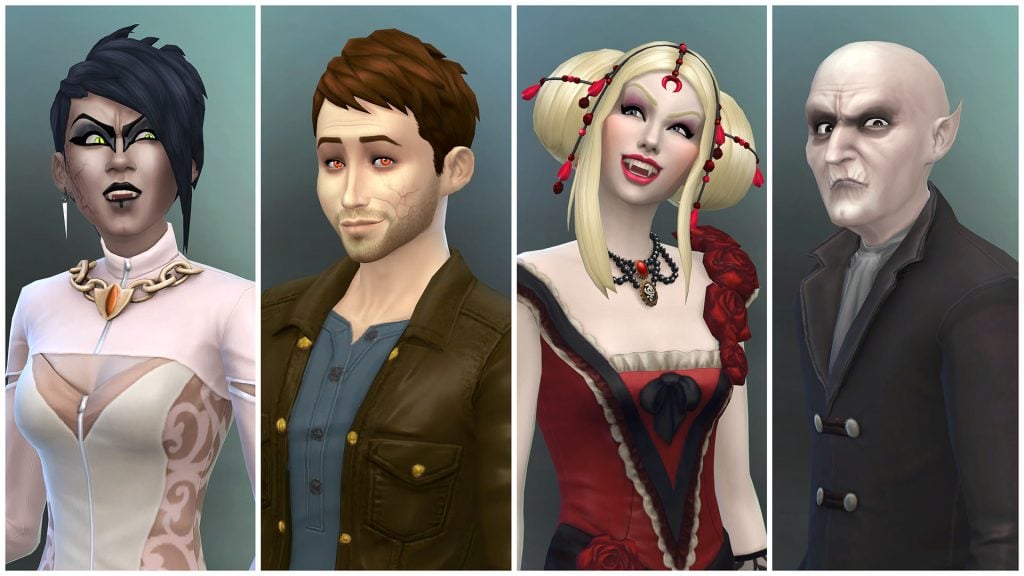
In Sims 3 for example, vampires, werewolves and whatnot were combined as none was deep enough to support an entire EP, but in Sims 4, we felt vampires had enough in them once you wpul [sic] from the Buffys, Twilights, What We Do in Shadows etc. that they could support a GP. And the team itself is usually so in tune with what fits with the Sims that while there are wacky ideas during brainstorms, they get whittled down pretty early.
As for ideas that I pushed for that didn’t make it… Probably the biggest, and it’s not really a single feature, but it was really important to the core of the game was in Sims 3. Central to the “reinvention” of the game was this idea that you were moving up Maslow’s hierarchy (both the Sims and the players). Sims in earlier games spent much of their time worried about peeing and sleeping and starving. And the bulk of the design detail was at that level. But in modern life, that’s not what most people spend most of their time thinking about.
They’re thinking about how they’re going to maybe pay rent. They’re thinking about how they’re going to get fired and if they’re raising their kids right, and higher order goals like that. And I wanted to shift the entire experience to those higher level needs and desires and away from the emphasis on peeing and the sleeping and the eating. And I wanted the underlying systems and simulation to shift the detail to those elements and remove detail from the lower order needs.
We tried probably a dozen different ways of doing that, and it just became clear that we weren’t going to be able to maintain the semblance of a little being going through its daily routine while maintaining the flexibility and potential for emergent chaos without those motives. I’m proud of the progress we made though, and I think Sims 3 definitely takes the emphasis off of the peeing significantly, while leaving those motives to serve their purpose as part of the simulation. So from a player mindset, I think, I guess we did technically ship it, although mechanically I was never able to get rid of those motives entirely as I’d hoped.
Sims 4 Updates and “The Apology Tour”
SkysEevee: Thank you for introducing the toddlers back into Sims 4!
Matt Brown: Absolutely! I can’t take credit for the fact of them being added and making them free, and all of that. Maxis was already well into what I jokingly referred to as their “Apology Tour” when I rejoined the studio, adding back in features that were absent from Sims 4 but which were expected from previous iterations (ghosts, pools, etc.). And toddlers was always going to happen at some point. They were clearly extra missing.I personally like toddlers in the Sims as a designer because they do something that I have a silly name for. I refer to a specific aspect of design, as “perturbing the strategic landscape”… which is intentionally pretentious because it makes me giggle.
What I mean by that in the case of The Sims, is that you have a lot, a house, a family, careers. You’ve got things working. You have a sleep schedule. Your Sims don’t pee themselves. Somebody can cook. You’ve got decent objects and whatnot. It’s all humming. And you feel like you’ve got this, just like in real life sometimes.
And then you have a baby. And then they grow up and become a toddler. And they fundamentally screw up everything that was working perfectly, and you love them deeply, but now you have to re-solve all those problems in new and creative ways.
They perturb the strategic landscape.
And as a parent, that felt extremely core to what makes a toddler a toddler. You felt that in the Broke house in Sims 2 for sure, probably too strongly. That house was almost unplayable :). And I wanted to get that back double in Sims 4. I also wanted to add more depth, so that you actually felt like you were raising the toddler, and that to sort of drive that anxiety of being a parent, where you don’t know what to do, and you’re sure that everything you’re doing is screwing them up, and sometimes it is, and sometimes it’s actually making them something incredible, but you just couldn’t see it.
The team really squeezed a lot more than was supposed to be in there into that. We argued for more time. We went way over budget and apologized. I apologized a lot. It was a huge effort across every discipline, and the team was very very passionate about it. There were a ton of people involved (on the design side that was Lakshmi, who was pregnant at the time and presumably not made less anxious by her design 🙂 and later Dan Klein… I think that’s the first time I’ve realized that the designer for toddlers had a baby while designing them… that’s funny).
Item Description Inspiration
u/move_along_home:
How do you come up with the item descriptions in build/buy?
Matt Brown:
The item descriptions, I think, are something that it’s easy to take for granted, and definitely lots of people never even read them. But generally the way it worked was someone on the team, usually a producer, who had a particularly appropriate sense of humor, who “got it” and was a decent writer, would take it on. And then they would work their way through them bit by bit as the game was developed. We’ve had a professional dedicated writer from time to time as well.
At various times, we tried to codify the style to keep things consistent, but for the most part, that consistency came from the fact that the people writing the the descriptions were/are really big fans of The Sims and were very familiar with the tone of the games that came before them. So they sort of organically played it forward.
I think that scrappy human-ness and that lack of any heavy structure is part of what gives it that weird charm.
The Sims 3 Scrapped ‘Internal Memory’ Feature
u/jannaromantic:
This is really cool! I’m curious to know if there are any in-game features (in any iterations, but esp Sims 3) that you feel like not many people know about? Or any features that didn’t get the traction you expected?
Also, are there any interesting in-game features that didn’t make it into the final version(s) that people may not know about? If so, why didn’t they make it in?
Matt Brown:
Absolutely! I love talking about The Sims and gaming history and development in general.
And that’s a really good question. I’m sure I’m missing something (I’ll post back here after I poll some of the other designers). I think at this point, the game has been around long enough, and the community is so passionate about digging in and finding everything that I really don’t think there’s anything super secret hiding in there.
At this point, I can say that the best chance of there being something that no one’s ever seen is probably in The Sims 3, just because we made it so easy to add random little features or little one-offs, Non-art content (e.g. books) were so incredibly cheap to make that it didn’t really matter if no one ever saw it. You could still justify slipping it in. But looking through the wikis, I can’t think of anything that people haven’t found.
The meaning behind some of the random text and objects might not be known, or the origins of common terms like “rabbit holes”, “moodlets”, etc. But those aren’t really easter eggs per se.
One huge planned Sim 3 “feature” that many of us felt very passionately about was full player scripting of new content in C# (a well-known flexible programming language). I was and still am a C# fanboy, and I felt that moving away from the rickety visual scripting language in Sims 1 and 2 (called Edith) to a “real programming language” that was still accessible to hobbyists would significantly open up what we could do with the game as well as allow us to give players the same capabilities and just generally unleash the crazy :).
The goal was to basically provide a “Sims SDK” with a robust and documented API that anyone could use to create pretty much every type of content in the game. Objects, interactions, careers, rabbit holes, new motives… anything.
In the end though, The Sims really was the first game/entertainment oriented product to actually try to use C# in that way (Unity, which uses C# extensively, didn’t even exist yet). And while we managed to build the game on that foundation, and the flexibility of it definitely enabled the crazy breadth and depth of The Sims 3, enabling it for players ran into too many additional hurdles (legal, security and safety, performance, etc.) and had to be cut. Bruce Wilkie (also the guy that did genetics in Sims 2 amongst many other things) was driving everything C# related and made amazing progress, but we just couldn’t address all of the complications.
Reasons For Bella Goth’s Disappearance
u/OcarinaGamer4:
The Sims 2 Bella Goth plot line, what was the inspiration for her to go missing? Fan circles have speculated for years that it was because she was accidentally deleted during the games creation but that always sounded far fetched to me.
Also, what sims 3 and 2 towns would you choose to live in? I love Sunset Valley and Bridgeport!
Matt Brown:
Wow. You guys are really into Bella :). I confess I don’t actually recall what the actual reason for that was, or if there was a deeper reason than just it sounding interesting. (if someone’s here from the dev team that remembers better, please chime in :))
Really the only constraints we put on those stories were that, we wanted them to be true to the players who knew these characters and their histories from previous games/packs, and we had usually had some design requirements. We often wanted to show off the diversity of new game mechanics, whether it’s genders or personality traits, aging, whatever… anything, that would showcase as much of the game as possible across these different families. But beyond that, I don’t know. It definitely was not that she was deleted. We have backups of backups of everything. And you know, recreating a character like that, is not particularly difficult. It’s a fun theory though :).
As for which towns/neighborhoods I would live in… I know they’re not the objectively “best”, but honestly, I’d live in Pleasantview and Sunset Valley. I just spent so much time with those OG towns during development that they’re special to me. And they’re cozy for all of the little quirks and things that I can see that could have been better and that were often improved upon significantly in subsequent towns/neighborhoods/worlds. But I love ’em 🙂
The Challenging Side To Development
Deleted User:
What gameplay ideas sounded good on paper but were horrible to implement? Did any of them make the cut?
Matt Brown:
Well, I don’t think this is maybe quite what you mean, but in Sims 2, where we introduced genetics, or playdough genetics at any rate, where your children would inherit physical traits of the parents, that was a feature that I really, really wanted. I prototyped it myself in a little app with actual art (thank you Charles London :)). You could mix and match facial parts, edit a mom face and a dad face, and then keep making kids to see that they look like the parents and that they didn’t fall apart or break down (at least not in the prototype :)). I even made each change or baby generation needlessly squashy stretchy bouncy so that it would feel playful for no reason. Whenever you generated a new head, it went BOING.
That took me maybe three days, maybe a long weekend, and I showed it off, and the team loved it. But actually translating that into something that worked within the incredibly complicated environment of The Sims, and so that the Sims could do everything that Sims need to do, all of the things necessary for a sim to be a real sim while looking like their parents in the actual game was significantly harder.
And the outstanding engineer implementing that, Bruce Wilkie, then had to spend almost a year just getting back to what I had hacked together all smoke and mirrors and shown off in a little prototype. I’m still apologizing to him for that, but the end result, I think, was pretty awesome. There are little issues with it, but I think just that it exists, is amazing.
Another feature that I can think of along those lines would be, anytime we try to script or overly direct Sims behavior. It always seems like something that it should be easy to do, or that’s necessary, but then just the nature of everything else in The Sims is so emergent and organic. It’s just so against the grain of what The Sims is that just never works. You see this in, I think a lot of Sims 4 expansion packs (although it’s not unique to them), where there’s extensive “scripted” behavior (e.g. restaurants). The scripting fights against the existing emergent systems. And it also loses a lot of the opportunity for emergence that is inherent in the underlying simulation. Just loosely bounding them a little bit, but not not actually prescribing what they do, ends up being far more interesting.
So those are more a class of features that somehow always make it in. They’re much harder to implement than people imagine, and then they largely don’t work very well.
The History Of Sim Deaths
u/amburgundy:
Was it your idea for meteors to hit schools and take out an entire town’s child/teen population in ts3? not cool, man.
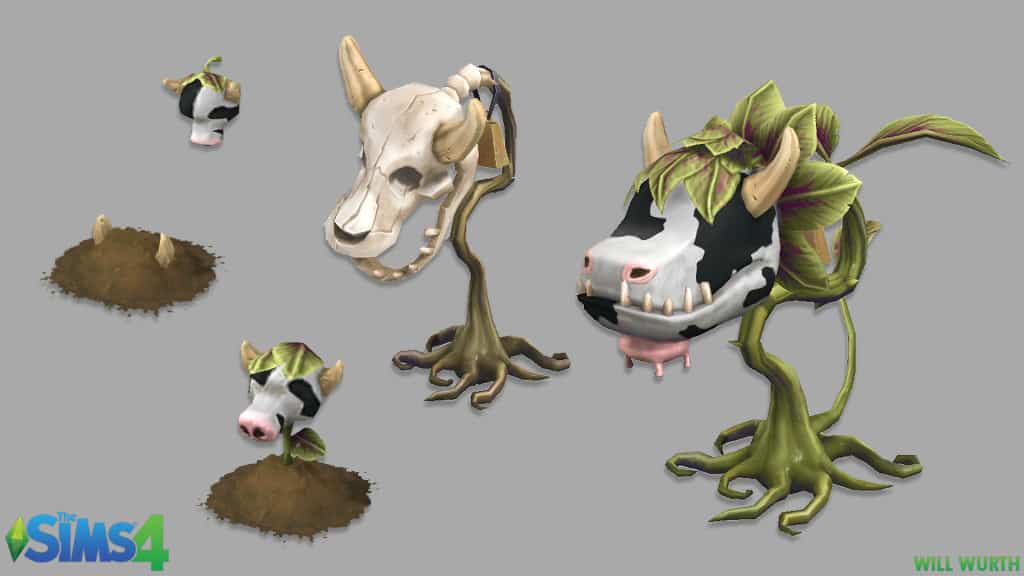
Also, would love to hear more about the development & design processes of the cowplant & of plantsims- what did early drafts look like? What was changed from the original ideas?
Matt Brown:
The meteors aren’t specifically my fault, no :). But Sim deaths have an interesting history. When designing Sims 2, we recognized that some Sims 1 players really enjoyed torturing or killing their Sims in funny, creative ways. We really wanted to acknowledge and “yes and” that.
So in subsequent iterations, we tried to come up with more fun ways for Sims to die beyond removing the pool ladder. And initially, the intent was entirely, sort of fan service, or to give players more of what they were enjoying and but not to take away any agency from the player. Over time though, some of that intent has been lost, and various ways to die have been either more catastrophic or game ending than fun emergent storytelling. They’ve too often become not driven by the player or at a minimum, the player’s risk taking.
Unfortunately I wasn’t involved with the cow plant, but I did always have a design mantra of 80% stuff you see every day, 15% stuff you have maybe never personally seen but you’re sure it happens, and 5% ridiculous/farcical/magical or just weird. The cow plant was clearly in the 5% 🙂
Planning For The Future
u/Sad_Click5373:
If this isn’t too personal, what’s the reason for your departure from EA/Maxis?
Edit: Another question I have is, were the number of Stuff Packs & Expansion Packs to be released for The Sims 3 predetermined during its development?
If not, why did the series end with Into the Future specifically? I’m aware ITF coincided with TS4 release but TS4 was criticized for being an unfinished game (I.e., no toddlers and no pools in the base game).
Surely EA could’ve taken time to release more packs for TS3 while simultaneously giving devs extra time to polish TS4?
Matt Brown:
I’ve actually left EA/Maxis twice :). Once in 2008 and once in 2018.
Near the end of Sims 3, I began focusing on spinning up Sims 4, largely focusing on identifying the key areas we’d need to dig into first if we wanted to make the Sims an MMO. At the time, I’d made two Sims games end to end, and having witnessed the alpha/beta/live of Sims Online and seen all of the issues, I really wasn’t at all on board with the idea of making another “Sims MMO”. I also had the opportunity to go to Blizzard to co-lead the design at the very beginning of a new MMO (ironically enough) that would let me bring my quirky Simsy-ness to a whole new genre. If I was going to learn how MMOs are developed, I figured I should do it where my favorite MMO was made :). That was Titan fwiw. I plan to talk about some of those prototypes on my site and do some deep dive videos in the next little while. It’ll be clear why it was relevant 🙂
In 2018, the stream of EPs, GPs, and SPs had become a little rote, and I’d spent the last 6-9 months helping spin up a reinvention of SimCity (lead by Eric HW) that had morphed into something more creative and sandboxy and Maxis silly magical to the point that we stopped calling it SimCity. We’d gotten to a place where the studio was seeing something special there, and I wanted to find another way to “pay it forward” I guess. Roblox (what I left for) ended up being the perfect opportunity to work with young creators and to build systems and tools to help them discover game development and content creation and become game developers themselves.
EDIT: Not really, no. We always know we’ll end up making additional content, for no other reason than we had so many fun ideas during base game development that just wouldn’t fit. But I’m not aware that we ever plan packs ahead of time. There are a few “gimmees” like pets that we know we’ll end up doing at some point, but nothing beyond that.
I wasn’t there for the transition from Sims 3 to 4, but from what I understand, there was some regret later that there wasn’t more overlap. I think there’s always a “but if we don’t stop making the old one, they won’t buy the new one” with executives, but I’ve never seen that play out on any franchise I’ve been a part of. New iterations are mostly additive. If you loved the previous game, you’re not going to ignore the cool new version of it. And just because you buy the new one, you’re not going to throw away the game you’re already so invested in.
The Removal Of Open Worlds
u/CadyMoring:
What was the reasoning behind removing the open world? It was such a step backwards. Sims3 is the best and I’ve played less than 5 hours of Sims 4, just not the same vibe.
Matt Brown:
While I was only involved in the first couple of months of planning for Sims 4, my understanding of why the open world was removed was due to the mid-project shift in development goals. Sims 4 was initially designed to be a multiplayer MMO-like experience (although I’m not sure how big the world was or how heavily it relied on streaming… maybe one of the designers who bridged Sim 3 and 4 will see this and chime in :)). As such, it had very different technical requirements and a whole host of its own complexities and hard problems.
My understanding was that once they decided to go back to a single player experience, the shortest path to shipping was to simplify things back to what had worked in Sims 2 (more or less). There just wasn’t time to rearchitect everything.
(apologies to anyone who was directly involved for any misrepresentation, but I think that’s pretty much the gist)

What Would You Go Back And Change If You Could?
u/Ezuu:
What was your favorite thing to work on for the sims 3? Also now looking back at the game after all these years, what are some thing you would do differently or change if you could?
Matt Brown:
It’s maybe not the sexiest element of Sims 3, but I would have to say my favorite was probably the personality traits. They were loosely inspired by the advantages and disadvantages system in a tabletop RPG system called GURPS.
The specific implementation in Sims 3, I felt, was very elegant. It was incredibly flexible and easy to add traits that could affect pretty much anything. I think they really, really helped give a lot of character to Sims and a lot of storytelling opportunities. I really, really wish that we’d been able to open up the scripting though so that the community could have created their own personality traits. That would have been magical and justifiably insane. I also really enjoyed the design process for those and how different people came up with different traits and how they could be manifest in the in the game. Everyone bounced off of each other creatively. A gameplay engineer might be implementing some random object, look at the list of traits and often could trivially add a little tweak or modulation to their system/object based on a Sim having that trait. It all just kept building on itself.
I also have a soft spot for story progression, but I know that’s contentious :). The concept and design and the prototype (a Ray Mazza gem) were just this “Oh wow. This can work! And we can do all sorts of cool shit with it!”. The reality of implementation in a shipping game unfortunately couldn’t quite live up to that prototype hackery (see Sims 2 genetics above), but I still have a soft spot for it. I have a deeper dive on youtube if you’re curious about how it was original intended to work.
I also loved the customization. I’d wanted that for Sims 2, but we just weren’t ready. That it worked as well as it did is still amazing to me. I still can’t believe that that many very talented and patient engineers and artists actually put up with me for so long getting that all to work. It was pretty herculean on their part.
That customization is also one of the things I would have done differently. I’ve also been a proponent of creativity tools that almost “trick” you into feeling more creative than you actually are :). But the Sims 3 customization was so exhaustive that it wasn’t easy to work with. You could do anything in the world, but you had to be an interior designer to make anything look even remotely passable. I still can’t make a pretty sofa, but I really enjoy making my ugly ones :).
I would have loved to have focused more attention on the player experience and invested more in making it more accessible to everyone.
How Is The Game Prototyped?
u/Bus_Stop_Graffiti:
When starting the development of The Sims 3, what was the very first system/function of the game that was focused on and made it to the first prototypes and how did this shape the rest of the development?
Matt Brown:
That’s an easy one… the open world, and how we could get 100 Sims (I think 160 was our original target) in the world, existing, doing anything, and then simulating in the world simultaneously without the whole thing just falling over. That included the LOD system so that you could have those hundred Sims on screen at the same time if necessary. Probably a close second and third were the material customization and the usage of C# as the scripting language. Those were also core to the vision for the foundation that we wanted to build this new experience on.
Those were largely tech prototypes, but almost all of our designs had to start with “how will it work in a big seamless world with hundreds of sims”. Transportation (“How can you travel across the map? We need cars? Do I need a garage? What if I walk bit by bit across town? Do I have to walk back because I left my car at home?”)… How can I keep from losing my Sims?… Do I need to account for my commute time when leaving for work?.. those sorts of things.
The crazy customization didn’t affect design all that much, but it fundamentally complicated a lot of engineering work that now had to account for its unique performance characteristics. And it most definitely complicated asset creation. Sims 3 artists (including my wife who was the lead for object art :)) had to look at everything very very differently than in previous games. Rather than mapping a painted texture to shirt with a painted on pocket and sleeves, they now had to think carefully about how that shirt would be cut and sown. They were effectively creating a sowing pattern that would then be overlaid on a player-chosen print (like a pattern over fabric) and then remapped onto the shirt geometry. It’s a very alien way for artists to work and difficult to get your head around. If you didn’t do that, things like pockets or sleeves wouldn’t look like real clothing, cushions on sofas wouldn’t look at all like real cushions, etc. When it clicked though, it let us do incredible things that looked great and gave players that ridiculous creative freedom.
And lastly, the usage of C# heavily affected development in that it allowed us to do certain things much much more cheaply (creatively, not necessarily performance) than in Sims 1 and 2 and it gave our designers and “object engineers” (the team members creating objects, socials, etc.) the flexibility to prototype, often to a near shippable quality, almost anything really quickly.
That also allowed for way more of what I call “long tail” designs. A long tail design is a design that very few players may ever see or care about, but which the players that do experience it will appreciate. They can make a game feel much larger than it is because you have the feeling that even years later, you might discover something new. Every corner could be hiding something magical or just plain silly… often more magical and silly because you can’t believe it’s actually there at all.
Those designs are normally the first to get cut because the cost/benefit just isn’t there or is difficult to measure. But the ease with which the new foundation allowed for certain content to be created meant that a ton of those long tail features and quirky fun edge cases could be slipped in almost for free. That in turn was what allowed them to exist at all.
The Sims 3 Engine & Worlds
u/HouseUnstoppable:
From what I can see, the Sims 3 runs on a heavily upgraded Sims 2 engine right? Was it difficult taking that and making it go from the single lots to an open world?
Was is ever intended for the game to launch with more than one world, before Sunset Valley? Or was Sunset Valley always meant to be the big one?
Matt Brown:
I can see why people might think that, given that some key aspects of the game, like interactions on objects, object placement, rendering houses, build mode fundamentals, etc. could have been done in Sims 2, at least on the surface. But Sims 3 was an entirely new engine, from the ground up. Very ground up to the point that, we started with a green square and 100 instances of the same sim standing there in that field as a test. Everything from the core of the rendering to the language everything is scripted in to customization and the entire simulation are brand new. The requirements were just too different between Sims 3 and Sims 2.
Sims 2 was built on much of the core of Sims 1 however. The rendering, animation, build mode and whatnot were all new as they were much more sophisticated and properly 3D. But the simulation, scripting system, etc. were evolutions of the original game. Sims 4 is also an entirely different engine than any of the others… again, due to wildly different requirements, at least at the start of development.
I confess I couldn’t initially recall if we ever planned multiple worlds at launch. If we did plan that, we scaled it back so very very really really early that I blocked it out entirely :). In fact, according to a friend who was directing the engineering, World Adventures was extra difficult due to assumptions in the code that there would only be a single world. Properly supporting multiple worlds was part of what made that first pack particularly difficult.
Scrapped Sims 3 Ambience Feature
u/LizaKhajiit:
Hi Matt! Mike Sellers, who was a lead designer on The Sims 2 early in development, once talked about a feature that didn’t make it into the final game: an adaptive environment system that would change the lighting, music, and camera angles based on the kinds of objects the player placed – like shifting the tone toward horror or romance depending on your decor. He said it was his favorite removed feature.
Do you remember this system? I’d love to hear more about how it was supposed to work, how far it got in development, and why it was ultimately dropped.
Matt Brown:
That’s really interesting. I don’t know that Mike and I ever overlapped. Although, when I came on as the technical director, initially on Sims 2, the game barely existed as a game. It was kind of a green screen with some gray boxes and really, really early, build mode largely brought over from Sims one. But the 3D engine was propped up, and the Sims 1 simulator and the Sims 1 tool chain for scripting objects and whatnot, was functional… very, very buggy but technically functional.
As to that specific feature, I wasn’t there when it was being discussed. That must have been extremely early in development, and I never saw a design for it. I think I heard it mentioned briefly in a conversation. The description on that Quora page sounds roughly like what I heard mentioned. The idea was basically to analyze various contextual elements moment to moment (objects, placement, sims and sim state, current interaction, etc.) and then procedurally place cameras and lights, trigger music and SFX, etc. to create a more cinematic moment that (hopefully) amplified and elevated the moment.
Personally, I wouldn’t have incorporated that design, and in the end we didn’t. I would see that as having similar issues to emotions in Sims 4 in that it over prescribes a narrative. I got into the emotions design a bit in an earlier answer and why that seems cool on the surface but largely goes against what makes The Sims special. I could see providing those same tools to builders or puppeteers though, so that they could apply them to a room, or even apply them to a sim, so that when they did a certain social that always happened. I think that could be really funny, and it would allow players to create some compelling moments and some very strange ones :).
But similar to the emotion discussion, I think that runs the same risk. Sometimes you’ll get it right, and it’ll be almost like a magical easter egg that the game noticed all clever like and really embraced and amplified what you were trying to do. But more often than not, you’re likely to be wrong. And that means you might be trying to have a romantic moment, and your Sims are kissing for the first time, and suddenly it starts playing horror music and lights everything demonic red, because there’s a Sim who hates you standing in your front yard, but you didn’t even see them.
Obviously, you can imagine a system that’s perfect, but you also can imagine that it likely rarely would be and in general I would consider those violations of players’ mental models to be more negatively impactful than the benefit that you might get from occasionally correctly guessing their intent. Moreover, you’d need to do a crazy number of them or players would get tired of them really quickly, particularly in an “evergreen game” like The Sims.
The little “life moment” cinematics in Sims 2 (e.g. first kiss, giving birth, etc) for example, already bug people, and even though those were intended to be extremely low frequency and were quite well done, they still get old fast.
But that’s just my take. Design is subjective :).
The Removal of Create-A-Style
u/sosteph:
Why step away from the customization of sims clothing and all items?
Matt Brown:
With the caveat that, other than a month or two of some very preliminary planning for Sims 4, I was not involved in the development of the base game… I’m very aware of its development history.
But the main reason from my understanding is that that level of customization, that sort of layers and layers and layers of every material on every object that could be comprised of any print with multiple regions with custom colors for every region… All of that was extremely difficult to to implement and extremely difficult to make performant (and it arguably still isn’t always). So that capability was baked into the very core of the engine from the beginning. It was actually something I’d wanted to do on Sims 2, and when we started Sims 3 from scratch, I finally had a chance. So it’s baked into the “soul” of that engine.
When they went to make Sims 4, it was being designed initially as an MMO… a massively multiplayer client/sever sorta joint. And those often rely very heavily on optimizing streaming and compression and lots of things to make the world function properly at that scale without load screens. And as a result, MMOs generally have very different constraints and limitations than traditional “load-screen” games.
And with that many players just running around with individually customized Sims in their pink and purple paisley slacks all willy nilly, and everything being unique, it really just couldn’t have been done practically in that world. Then when the Sims 4 pivoted back to a a single player experience that customization hadn’t been baked into the core of the engine, and there was no practical way to bring it back in time. Incidentally, we did largely pull this off many years later in Titan at Blizzard (before it pivoted to Overwatch). Unironically, Bruce Wilkie also worked on that :).
That’s my understanding. It’s possible there were some design disagreements as well. There was always a contingent that thought being able to change the materials on an object kind of screwed with the gameplay mechanic of nice objects satisfying motives more efficiently and being more expensive, and lame objects being less efficient, cheaper, and more ugly. That crazy Sims 3 level of customization basically decoupled the aesthetic from the function, and I know there were some people who didn’t care for that. That was part of the reason we didn’t do it in Sims 2, but I don’t believe that’s the reason that it was removed between Sims 3 and 4.
How Modders Impact Development
u/casey4190:
Did the modding community impact the development of the game in any way?
Matt Brown:
Oh definitely. The modding community had a significant impact on the way we thought about a lot of features. I can think of several examples where the consideration of the health of the modern community and all of that were significant factors in the design.
For example some of the communally viral ways that people played sims 2, like legacy challenges and similar “long play” challenges were always front of mind during Sims 3 development, as both from a technical perspective and a design perspective, we needed to make sure that everything stayed as stable as possible when played that way. We wanted the game to keep running as well as possible when you’ve played for 20 generations, and we also needed the game systems and simulation to continue to function that far down the line. When things simulate and systems run for long timelines, they often accumulate small (rounding)errors, imbalances, multiplicative compounding (see Sim genetics :)), etc.
In many cases in and out of The Sims, designs don’t have to deal with those issues and can be much simpler for it. Often that’s due to most systems having natural “reset points” like levels, rounds, runs, matches, etc. that prevent most systems from accumulating state. Thanks to legacy challenges, we didn’t have that luxury :).
Another example might be the extensive customization of objects… materials, prints, colors and all of that. That was a something I was very passionate about (since early Sims 2). I wanted the capability as a service/present to custom content creators, as they clearly love that sort of customization, and this felt like a crazy enabler for them. But on the other hand, I had a real concern that this could gut the modding/custom content community. So much custom content, at least superficially, was retextures and recolors, and making it trivial might devalue that content to the point that no one bother to share it. That simpler custom content creation also served sort of as an “on ramp” for creators to more sophisticated custom content, and building it all into the base game could potentially remove the motivation to step into that broader custom content world.
In the end we decided that it was important enough and sort of transformative enough for the franchise that we were willing to take that risk with the hope being that the community would step up or step into other types of customization. And they clearly did. 🙂
And I’d also consider the use of C# as the scripting language in Sims 3 (used for all of the systems, objects, etc.) to be heavily influenced by the modding community. The primary reason for using it was to enable modders to do much much more than they could in previous games and to make it actually “professional” and properly supported. Imagining what crazy things future Sims 3 modders would want to do (based on the Sims 2 mods at the time) was key to designing the whole environment.
In the end, we weren’t able to ship it to players (reasons and longer discussion elsewhere in this thread), but the crazy depth and breadth of content in Sims 3 is a direct result of using C# for scripting and the flexibility that gave us… and that was motivated by the modders (even if they never got to unwrap their present).

The Sims 2 Development Troubles
u/LizaKhajiit:
What was the most stressful part of developing The Sims 2?
Matt Brown:
There were several notably stressful bits in The Sims 2 development. For me personally, I was directing the engineering for the sequel to one of my favorite games at arguably my favorite game studio, and I desperately didn’t want to screw that up.
But as to the game itself, I’d say the most stressful part was probably how incredibly successful The Sims had already been. Some of the original team was working on Sims 2 and that helped bridge the gap, but Will wasn’t involved, and there was a pervasive sense that no one was really quite sure exactly what made it so successful. I used to joke that our “mission” on Sims 2 was “Don’t screw it up”. That largely led to what I call a 3M design (3M = More More More) in which you mostly look at what worked in the previous version and just do a bunch more of it. There’s nothing inherently wrong with that, and it led to vastly expanded build tools, gorgeous visuals, tons more objects, teenagers, etc.
However, it also meant that as we were nearing the end of development, we realized that the core of the game loop felt eerily similar/identical to the original game. There was a bit of a panic at that realization and a worry that all a “pretty Sims 1” wouldn’t be enough to carry the franchise forward. That wasn’t a remotely accurate or fair assessment of what was there, but it stuck with someone, and we needed to propose a “fix” (not really quite how game development works :)). In the end, we promised that if we could get another 6 months (iirc), we could add “key new features that will more clearly differentiate Sims 2 from Sims 1”.
In the end, they did give us the time, and those features turned out to be a bunch of extreme personality-based behaviors/interactions/socials and Wants and Fears. I don’t know that those transformed the experience (although wants and fears did give the Sims more depth and could make them feel “smarter”), but the extra time also let the team fix tons of bugs, optimize things, and to add a ton of smaller little bits that really made the game feel loved. And being trusted enough to be given time to “extend” and polish the game ended up being a positive thing for the team.
Plus… those heavy handed personality bits pointed the way towards personality traits in Sims 3, and Wants and Fears led to Dreams and Promises (both of which are some of my favorite systems).
What new facts were you surprised to hear in this AMA? Make sure to stay tuned to Sims Community for all updates on The Sims, and its development!


The Sims 4 was never meant to be a singleplayer game, that explains a lot… that’s why there’s loading screens between each lot, that’s why Sims spawn in front of your house, that’s why when you select a lot to travel the game asks you who you wanna bring with you (including sims outside of your household)…
that’s why The Sims 4 will never have the depth the previous 3 games had no matter how much DLC they throw on top of it.
I think sims 4 has about as much dept as Sims 3 or 1. 2 was the real beast in systems upon systems.
What makes 4 much more less enjoyable to me compared to 3 is actually the emotions system. I’m glad that the developer here recognizes that. I find it very annoying.